

The widespread technology outages that have gripped the U.S. over the past week weren’t the result of cyberattacks, but they have nonetheless exacerbated fears about increasingly sophisticated AI-powered hacking. They also highlight the difficulties that companies face in trying to balance patching vulnerabilities while keeping critical services running.
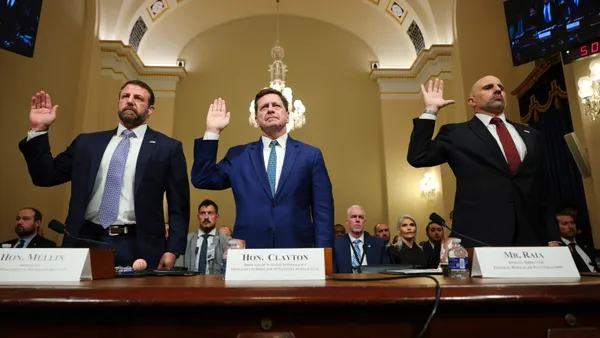
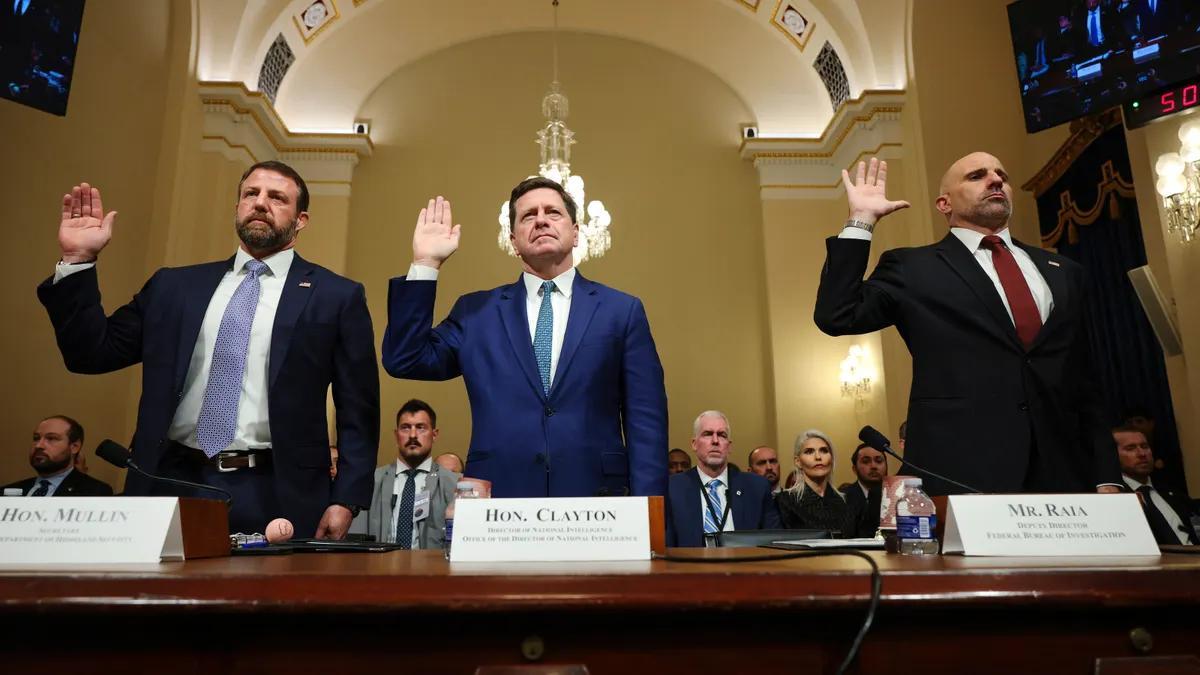
The technology failures — which have affected organizations as diverse as Microsoft, the Federal Aviation Administration, JPMorgan Chase, United Airlines, Apple and the National Security Agency — dominated the House Homeland Security Committee’s annual global-threats hearing on Wednesday, with lawmakers repeatedly pressing top U.S. government officials about whether the outages were connected and whether cyberattacks or AI were to blame.
“There is no indication whatsoever that there is any cyber malicious activity related to any of those incidents,” FBI Deputy Director Christopher Raia told lawmakers, adding that the bureau’s cyber experts were “on the scene with a lot of these companies” out of “an abundance of caution.”
Director of National Intelligence Jay Clayton assured lawmakers that “what we have seen over the last 10 days is not an orchestrated attack by a foreign malign actor.”
Instead, at least some of the recent outages resulted from security teams scrambling to apply patches for vulnerabilities discovered by frontier AI models. In October, security researchers disclosed a serious vulnerability in PHP, and on Tuesday, a security firm revealed a critical flaw in Java.
The patching process forced some organizations to take affected systems offline and caused others to experience unexpected disruptions.
“The issue we are dealing with … is exactly that type of routine upgrade,” said Clayton, who previously told Fox Business that an NSA communications network outage resulted from the spy agency patching the PHP vulnerability.
But even as the officials downplayed fears of malicious activity, they acknowledged that the outages pointed to serious challenges facing the nation as businesses and critical infrastructure operators with aging systems try to respond to rapid-fire vulnerability disclosures.
“Our digital infrastructure is becoming increasingly outdated and needs to be upgraded,” Clayton said at the House hearing. “The better we do that, the better America will lead in commerce, in defense, in national security, and all the things that matter.”
The U.S. government has repeatedly urged companies to prioritize resilience so their systems continue to operate during disruptions, particularly given worries that China will seek to sabotage U.S. infrastructure during a conflict. The recent outages show that many businesses still haven’t implemented those kinds of resilience plans.
A preview of disruptions to come
Senior lawmakers who focus on intelligence issues warned that more upgrade-related disruptions would be necessary as businesses raced to stay ahead of hackers.
“The rapid advent of highly cyber capable AI models, including open-weight models, has accelerated the ability of both attackers and defenders to discover vulnerabilities and create exploits, necessitating even greater urgency to patch systems regularly,” Rep. Jim Himes, D-Conn., the top Democrat on the House Intelligence Committee, said in a statement. “It is possible that the increased pace of vulnerability discovery and patching could cause more frequent outages, but the breakneck pace of patching we have seen in recent months is vital to shore up the security of all IT infrastructure.”
Sen. Mark Warner, D-Va., the top Democrat on the Senate’s intelligence panel, said in a statement that the race to patch vulnerabilities discovered by AI before hackers can exploit them is “putting tremendous strain on systems that weren’t built to handle that pace of change.”
State and local officials, including those who manage critical infrastructure, were among those scrambling to understand the outages. The Multi-State Information Sharing and Analysis Center (MS-ISAC) held a briefing for its members on Wednesday that drew 1,100 participants.
Speaking to reporters later on Wednesday, leaders from the MS-ISAC’s parent organization, the Center for Internet Security (CIS), said the incidents highlighted clear lessons for infrastructure operators.
“When we do patch, when we do upgrade, note where your systems are, what critical services that they are providing, and how it is that we can safely roll out patches and upgrades and still keep critical services online,” said Phyllis Lee, CIS’s vice president of content development.
Cybersecurity experts have “known for a very long time” that aging infrastructure and extended software supply chains present serious problems, said Randy Rose, vice president of security operations and intelligence at CIS. “AI is essentially highlighting that for us.”
Clearer outage-related communication needed
The drumbeat of high-profile outages has generated widespread frustration and even conspiracy theories, a trend that government officials have noticed with alarm. Even some House lawmakers expressed skepticism that the outages were truly unrelated to rising geopolitical tensions between the U.S. and adversaries with advanced hacking capabilities.
“Just a coincidence?” Rep. Nick LaLota, R-N.Y., asked at Wednesday’s hearing. “Five in one week while we’re fighting Iran, while China is getting aggressive, Russia and Ukraine?”
Rep. Shri Thanedar, D-Mich., put it more succinctly: “What the hell is going on?”
The Trump administration is planning to meet with leading industry executives to discuss ways to minimize the friction and suspicion associated with inevitable future outages, Secretary of Homeland Security Markwayne Mullin told lawmakers.
“We’re actually convening a phone call with industry, because … it’d be helpful as we’re moving forward that maybe the industry that’s doing the upgrade could inform their customers that it’s going to take place,” Mullin said. “Because what happens online is a tremendous amount of fear, and we can understand it, I think all of us can understand it, but there’s no cause for it.”
AI-fueled attacks are here and multiplying
While the outages might not have been the result of cyberattacks, autonomous or otherwise, AI is giving attackers new capabilities that are making intrusions faster and more sophisticated. A recent spate of attacks using AI penetration-testing frameworks has put cybersecurity experts on alert.
“The risk of disruptive or even damaging cyberattacks is very real,” said Himes, the House Intelligence Committee leader, “and we need to do more to harden our critical infrastructure against attack.”
At Wednesday’s hearing, Democrats argued that the Trump administration’s downsizing of the Cybersecurity and Infrastructure Security Agency had exacerbated the risks facing the U.S.
“At precisely the moment that these threats were growing, the Trump administration gutted CISA, the agency responsible for helping protect us against those attacks,” said Virginia Rep. James Walkinshaw, D-Va.
Between layoffs at CISA and firings at the FBI, workforce cuts have “decimated the cybersecurity personnel that this administration entered office with,” New York Rep. Dan Goldman said. “You all have an obligation to restore that.”
Warner, the Senate Intelligence Committee leader, said in his statement that the CISA cuts “have weakened the very expertise we need to navigate moments like this.”
Mullin, the DHS secretary, insisted that the government was prepared to face growing threats, even as CISA is moving slowly to onboard new employees. “We have not missed a mission,” he said.
During a White House background briefing on Wednesday evening about the outages, a reporter asked a senior Trump administration official what Americans could expect from a real cyberattack if routine software updates could cause such chaos.
The official, who spoke on the condition of anonymity, responded, “That is a question the American people should be asking.”