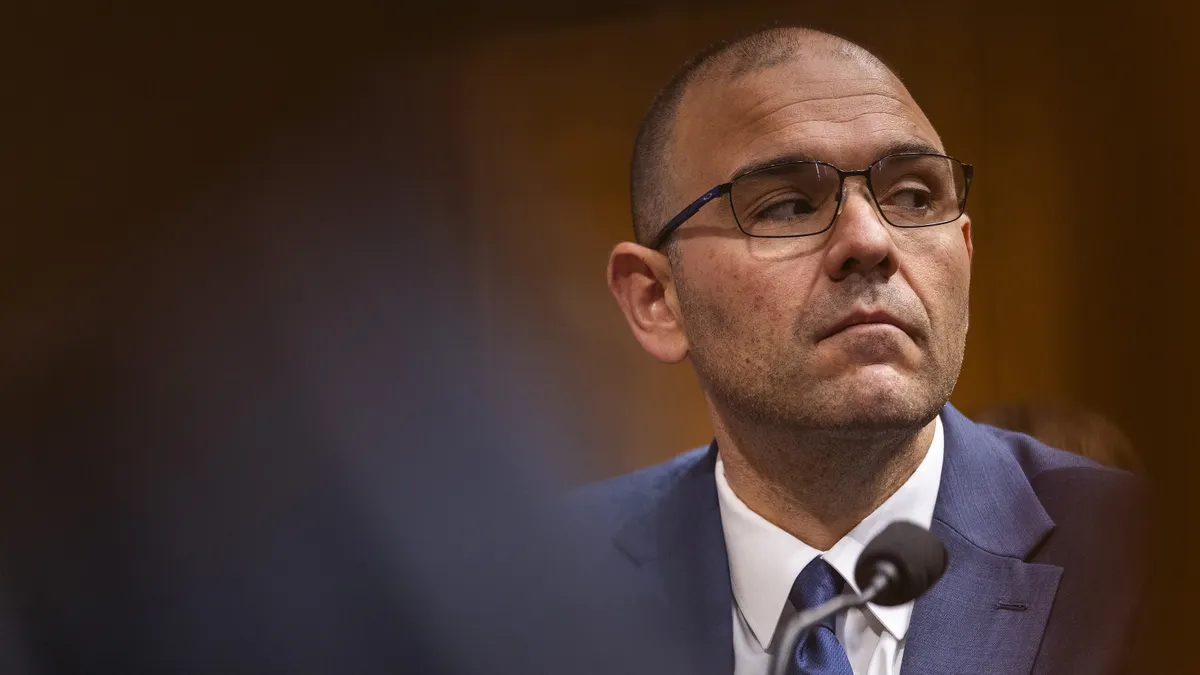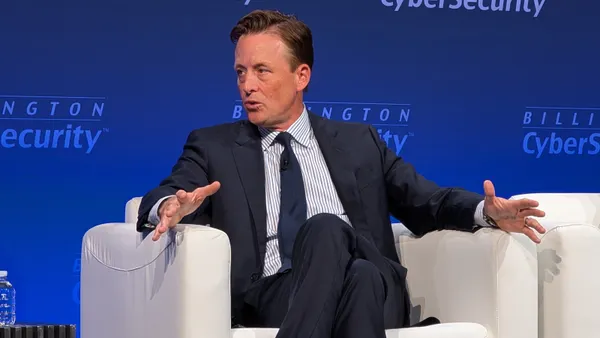


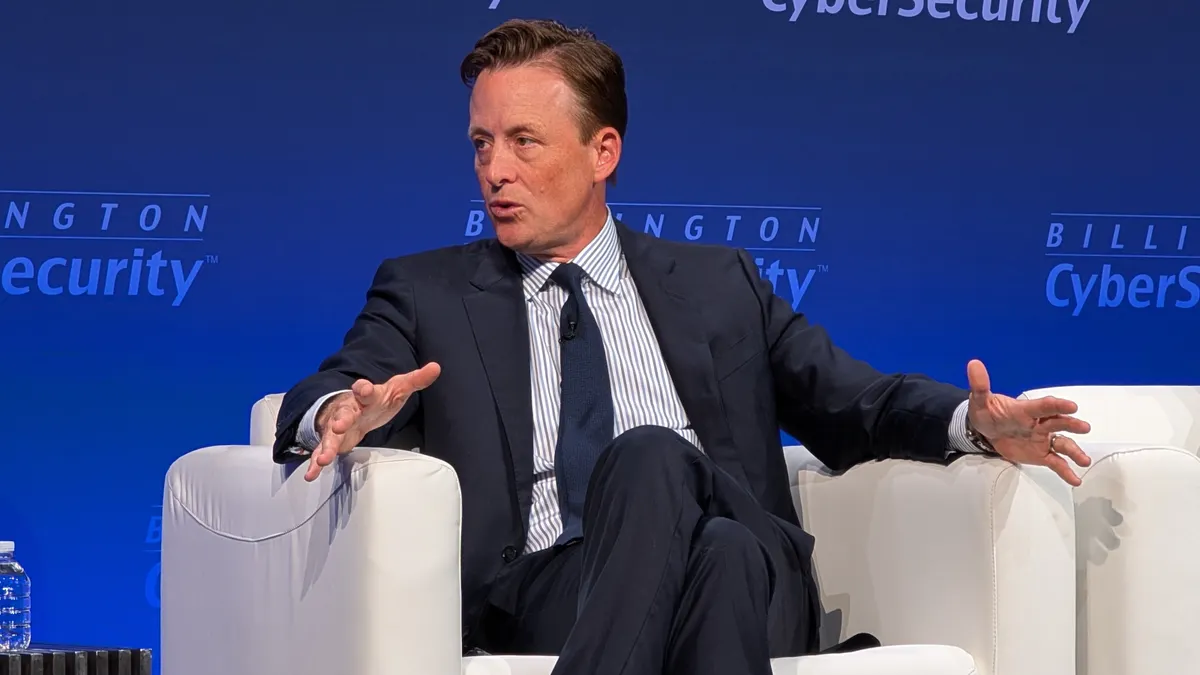
National Cyber Director Sean Cairncross, President Donald Trump’s top cybersecurity official, is leaving the government, injecting a fresh element of uncertainty into the Trump administration’s approach to a far-reaching issue with significant national security implications.
Cairncross, a former executive at the Millennium Challenge Corporation and the Republican National Committee, has led the Office of the National Cyber Director (ONCD) since August 2025. He has overseen President Donald Trump’s cybersecurity strategy, helped the administration reevaluate its AI security agenda following the debut of powerful new models and created pilot programs to help secure the water and healthcare sectors.
“I leave my role … incredibly proud of our work to strengthen America’s cybersecurity, protect our critical infrastructure, confront foreign threats, and position America to lead the world in [AI],” Cairncross told Axios.
Trump is tapping Kirsten Davies, the Pentagon’s chief information officer, to replace Cairncross in an acting capacity. The national cyber director position requires Senate confirmation.
Cairncross’s departure comes as the White House faces questions about its commitment to cybersecurity and its ability to stay ahead of AI-enhanced threats. On Wednesday, senior officials struggled to ward off concerns that cyberattacks had caused a recent series of technology outages. And on Thursday, Trump’s nominee to lead the Cybersecurity and Infrastructure Security Agency (CISA) faced skeptical questioning from Democrats who will soon control Congress.
“Our opportunity is to dominate the cyber landscape for generations to come,” Davies said on social media. “But only if we modernize and drive resilience into the foundations our great nation runs on, as well as build cyber talent for our future.”
The circumstances surrounding Cairncross’s departure were not immediately clear. A person close to the White House told Cybersecurity Dive that the president fired him over concerns that he lacked sufficient cybersecurity credentials, but a source told Axios that he resigned on his own. Cairncross did not respond to a request for comment.
Tenure defined by growing AI risks
AI security issues consumed much of Cairncross’s time in the White House. But while other senior administration officials called for tighter scrutiny of frontier AI labs, Cairncross repeatedly argued that the government should maintain a hands-off approach.
“Once the government is introduced into this space directly, there is a tendency for government to start to want to adjust the dials directly, and it is difficult to reverse that,” Cairncross said at an event in October.
Other officials soon began criticizing Cairncross for what they saw as his overly cautious approach to mitigating AI threats, which included freezing some of the government’s model evaluation work. Treasury Secretary Scott Bessent, one of the administration’s most influential voices on AI policy, had been particularly frustrated with Cairncross.
Cairncross’s star began to wane as the administration planned a more concerted effort to grapple with AI issues. He was part of the White House’s AI task force, but he was not one of its leaders.
White House cyber office faces uncertainty
Cairncross’s departure raises major questions about the future of ONCD, a small unit inside the White House that is supposed to serve as the president’s main source of advice about cybersecurity matters.
After Congress created the office at the end of Trump’s first term, President Joe Biden went through a series of permanent and acting national cyber directors as ONCD expanded its staff but competed for authority with the National Security Council. After Trump returned to the White House, his team dramatically shrunk ONCD, but Cairncross initially had significant influence thanks to his alliance with White House Chief of Staff Susie Wiles and his broad industry support.
Wiles left the White House following the midterm elections, and Trump replaced her with his senior adviser Stephen Miller, who Axios reported was behind Cairncross’s ouster.
It is unclear how Cairncross’s exit will affect ONCD’s work. The office has lost several top aides over the course of 2026, which could impede its efforts to carry forward the projects that Cairncross was championing, including regulatory harmonization and the critical infrastructure pilot programs.